

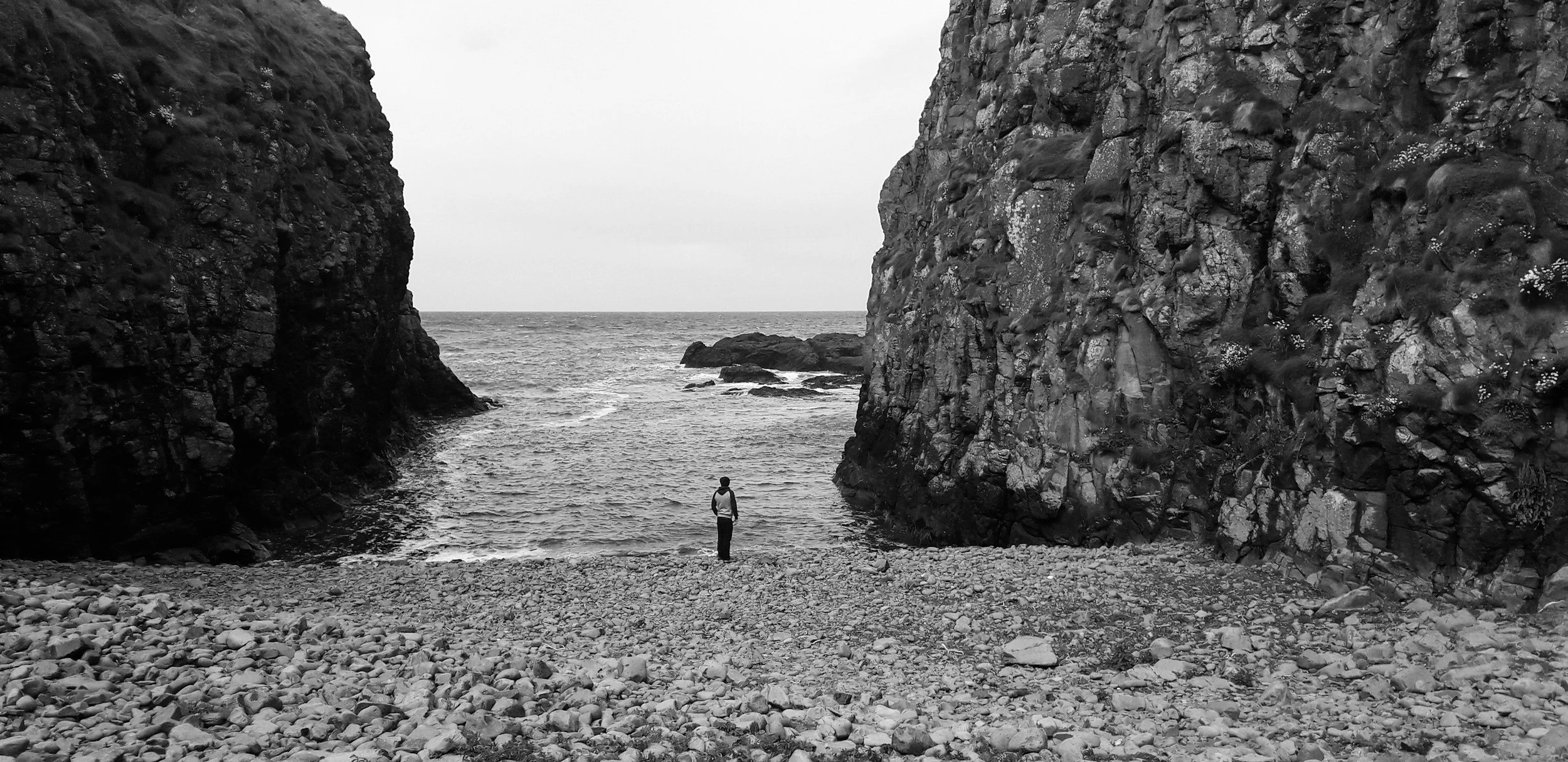
Standing in a current of something bigger than you are
Try picturing your parent or caregiver as a small child. See them at about the age you were when things first got hard at home.
If you grew up with a parent or caregiver caught up in alcohol, drugs or another dependency, it can be hard to see them as anything but the problem. That makes sense. They were the person you needed, and they weren’t there in the way you needed them to be.
Where they came from
It is rarely one thing. A hard childhood, a lot of stress, a mental health struggle, a family history of dependency or a very difficult stretch of life can all make a person more likely to reach for something to cope. No two people have the same mix, and the mix doesn’t decide how a life turns out. None of this is destiny.
Many adults caught in a dependency carry hurt from their own childhoods that nobody helped them with. A substance or a behaviour can take the edge off pain that has nowhere else to go. It works well enough that it takes hold.
Caught up in something bigger
I find it helps to picture a person standing in a current that is stronger than they are. For me, that person was my mum.
I had my breakthrough with her about five years after she died. In therapy one day I realised what it must have been like for her to raise three children under five. It was the sixties and she was on her own. Her own mother’s drinking had hurt her badly as a child, and she had to depend on men who weren’t good for us, because who else would take her on with three little kids?
She was getting by with what she had. She never set out to hurt me, and the hurt was a by-product of her own unhappiness.
Understanding without excusing
Seeing your parent as a person doesn’t let them off the hook. You don’t have to pretend the hurt didn’t happen, and you don’t have to feel warm towards them. Someone hurt you, and that stays true. You also never need to put yourself anywhere you aren’t safe in order to understand them.
What you may find is that some of what happened had little to do with you. You can hold that alongside everything you went without.
Worth asking yourself
What do you know about your parent’s childhood? Who looked after them when they were small?
Take your time with these. You don’t need to answer them today.
Take it to your therapist
Whatever came up for you while reading this, it’s worth taking to your therapist. You don’t have to have it worked out. You can just say, “I’ve been wondering who my parent was before all this,” and see where the conversation goes. A therapist can help you look at these things at a pace that feels safe, and it is much easier to untangle them with someone beside you.
If you don’t have a therapist at the moment, please consider finding one. You deserve that kind of support, and there is no wrong time to start. Our Find Support page is a place to begin.
